How Often Should You Go to a Chiropractor in Etobicoke?
You wake up with a stiff neck. Again. Or maybe that lower back ache just won't quit after your commute along the Gardiner Expressway. You know a chiropractor could help, but a big question holds you back.
How often do I actually need to go?
It is the most common question we hear at West End Rehab & Physical Therapy. There is a misconception that once you start seeing a chiropractor, you have to keep going forever. That is simply not true.
The short answer is that frequency depends entirely on your goals. For acute pain relief, you might visit 2 to 3 times a week for a short period. For rehabilitating an injury, it might drop to once a week. For maintenance and prevention, many of our Etobicoke patients see us once a month.
We believe in giving you the tools to manage your pain on your own. Our goal is to fix you for good, not to keep you on a treatment table indefinitely.
In this guide, we will break down exactly how often you should visit a chiropractor based on your specific condition, the latest Ontario health data, and expert guidelines.

CHIROPRACTIC ADJUSTMENTS
ACUPUNCTURE
PHYSIOTHERAPY
MASSAGE THERAPY
THERAPEUTIC YOGA
PREGNANCY-RELATED BACK PAIN
SPRAINS & STRAINS
CHAIR YOGA
SPORTS INJURIES
MUSCLE TENSION
KNEE PAIN
LOWER BACK PAIN
NECK PAIN
WHIPLASH TREATMENT
CAR ACCIDENT INJURIES
CHIROPRACTIC ADJUSTMENTS ACUPUNCTURE PHYSIOTHERAPY MASSAGE THERAPY THERAPEUTIC YOGA PREGNANCY-RELATED BACK PAIN SPRAINS & STRAINS CHAIR YOGA SPORTS INJURIES MUSCLE TENSION KNEE PAIN LOWER BACK PAIN NECK PAIN WHIPLASH TREATMENT CAR ACCIDENT INJURIES
The Three Phases of Chiropractic Care
Determining your visit frequency is not a guessing game. It follows a structured clinical progression. At West End Rehab & Physical Therapy, Dr. Kevin Cheyne and our team design treatment plans that evolve as you heal.
Most patients move through three distinct phases.
Phase 1: Acute Care and Pain Relief
This is when you are in pain. You might have tweaked your back shoveling snow or woke up with a "kink" in your neck. The goal here is simple: reduce inflammation and restore joint mobility.
Typical Frequency: 2 to 3 visits per week.
Duration: 2 to 4 weeks.
During the acute phase, your body is in a state of protection. Muscles spasm to guard the injured area. Frequent visits are necessary because the effects of manual therapy are cumulative. One adjustment might provide relief for a few hours or a day, but the muscle memory often pulls the joint back into a restricted state.
By seeing you more often initially, we interrupt that pain cycle. We use modalities like Interferential Current (IFC), ultrasound, and gentle mobilization to calm the nervous system.
Phase 2: Corrective and Restorative Care
Once the sharp pain subsides, we enter the corrective phase. You feel better, but the underlying issue—weak muscles, poor posture, or biomechanical imbalances—is still there. If you stop care now, the pain usually returns.
Typical Frequency: 1 visit per week.
Duration: 4 to 6 weeks.
In this phase, we shift focus from passive treatment (us doing things to you) to active care (you doing things). We introduce therapeutic exercises to strengthen the muscles supporting your spine.
This is where Dr. Cheyne’s background as a certified functional abilities evaluator shines. We assess how you move and give you specific exercises to fix movement patterns.
Phase 3: Wellness and Maintenance Care
This is the "prevention" phase. You are pain-free and moving well. The goal is to keep you that way.
Typical Frequency: 1 visit every 4 to 6 weeks.
Duration: Ongoing (patient's choice).
Think of this like a dental check-up or servicing your car. You don't wait for a cavity to brush your teeth. Maintenance care catches small restrictions before they become painful episodes.
A major study published in PLOS ONE supports this approach. It found that patients with recurrent low back pain who received maintenance care reported 12.8 fewer days of bothersome pain over a year compared to those who only sought treatment when symptoms returned.
Local Data on Musculoskeletal Health in Ontario
Why is chiropractic care so vital for residents of Etobicoke and the Greater Toronto Area? The local statistics paint a clear picture of the burden of back and neck pain.
The Cost of Back Pain in Ontario
Back pain is not just a nuisance; it is a massive economic burden. Research indicates that direct costs for low back pain (LBP) in Ontario hit approximately $330 million in recent years. This includes healthcare visits, diagnostics, and treatments.
When you factor in lost productivity—time off work—the cost skyrockets. If you are a business owner or an employee in Etobicoke, preventing back pain is a smart financial decision.
Prevalence in Our Community
You are not alone in your pain. Studies involving Ontario post-secondary institutions (like Ontario Tech and CMCC) found that the one-week prevalence of any low back pain among students ranged from 60.9% to 69%.
If nearly 70% of young, active students are dealing with back pain, imagine the statistics for the general workforce sitting at desks or working in trades.
The Future Outlook
The burden is growing. Canadian data projects that "Years Lived with Disability" (a measure of the burden of disease) due to low back pain will increase significantly by 2040.
This data underscores why we advocate for proactive care. We want to reverse this trend in our community.

The Severity of Your Condition
A minor muscle strain heals faster than a disc herniation. Dr. Cheyne has advanced training as an Advanced Practice Provider (APP) for the provincial Low Back Pain Rapid Access Clinic Program. He assesses patients in Central and South Etobicoke with complex spinal conditions.
If you have a complex history or neurological symptoms (numbness, tingling), your treatment plan requires more careful, frequent monitoring initially compared to general stiffness.
Your Daily Routine and Job
Do you sit at a desk for 8 hours a day? Sedentary behavior reverses the progress of treatment.
Office Workers: Often need regular maintenance to combat "tech neck" and hip tightness.
Tradespeople/Laborers: Often need care for repetitive strain and overuse injuries.
Athletes: Frequency fluctuates with their training season.
We tailor your schedule to your lifestyle. If you sit all day, we might prescribe more "desk yoga" or chair yoga exercises (taught by our specialist Laura McClean) to mitigate the need for frequent in-clinic visits.
Your Adherence to Home Care
This is the secret weapon. Patients who do their prescribed exercises heal faster. Period.
If we give you a stretching routine and you do it daily, you might only need to see us once every two weeks instead of every week. We prefer this. We want you to take control of your health.
Factors That Influence Your Visit Frequency
No two bodies are the same. While the three phases provide a framework, several variables dictate your personal schedule.
Deep Dive into Conditions We Treat in Etobicoke
Understanding your specific condition helps frame the timeline for recovery. Here is how we approach common issues at West End Rehab & Physical Therapy.
Lower Back Pain
This is the most common reason patients visit us at our Bloor St. W clinic.
Acute Episode: We might see you twice a week for the first two weeks to mobilize the lumbar spine and reduce muscle guarding.
Chronic Issues: If you have had back pain for years, it takes longer to retrain the body. Expect a 6-8 week corrective plan.
Neck Pain and Headaches
Neck pain often responds quickly to chiropractic adjustments.
Tech Neck: For posture-related pain, we focus on thoracic (upper back) mobility. Frequency usually starts at once or twice a week and tapers off quickly as you improve your ergonomic setup.
Whiplash: This is different. If you have been in a car accident in Etobicoke, the soft tissue damage can be severe. We guide you through a specific Motor Vehicle Accident (MVA) protocol that may involve physiotherapy and massage therapy alongside chiropractic care.
Sports Injuries
From golfers at St. George’s to runners on the Humber River trail, we treat active bodies.
Sprains/Strains: Treatment is intensive at first to manage swelling (laser, ultrasound) then shifts to rehab.
Performance: Many athletes see us preventatively before a big race or game. This is usually on an "as-needed" or monthly basis.
Why Choose West End Rehab & Physical Therapy?
There are many clinics in Toronto. Here is why patients in Etobicoke choose us for their care.
A Multidisciplinary Approach
We are not just a chiropractic clinic. We are a comprehensive rehabilitation center. Pain is rarely just a "bone" problem or a "muscle" problem—it is usually both.
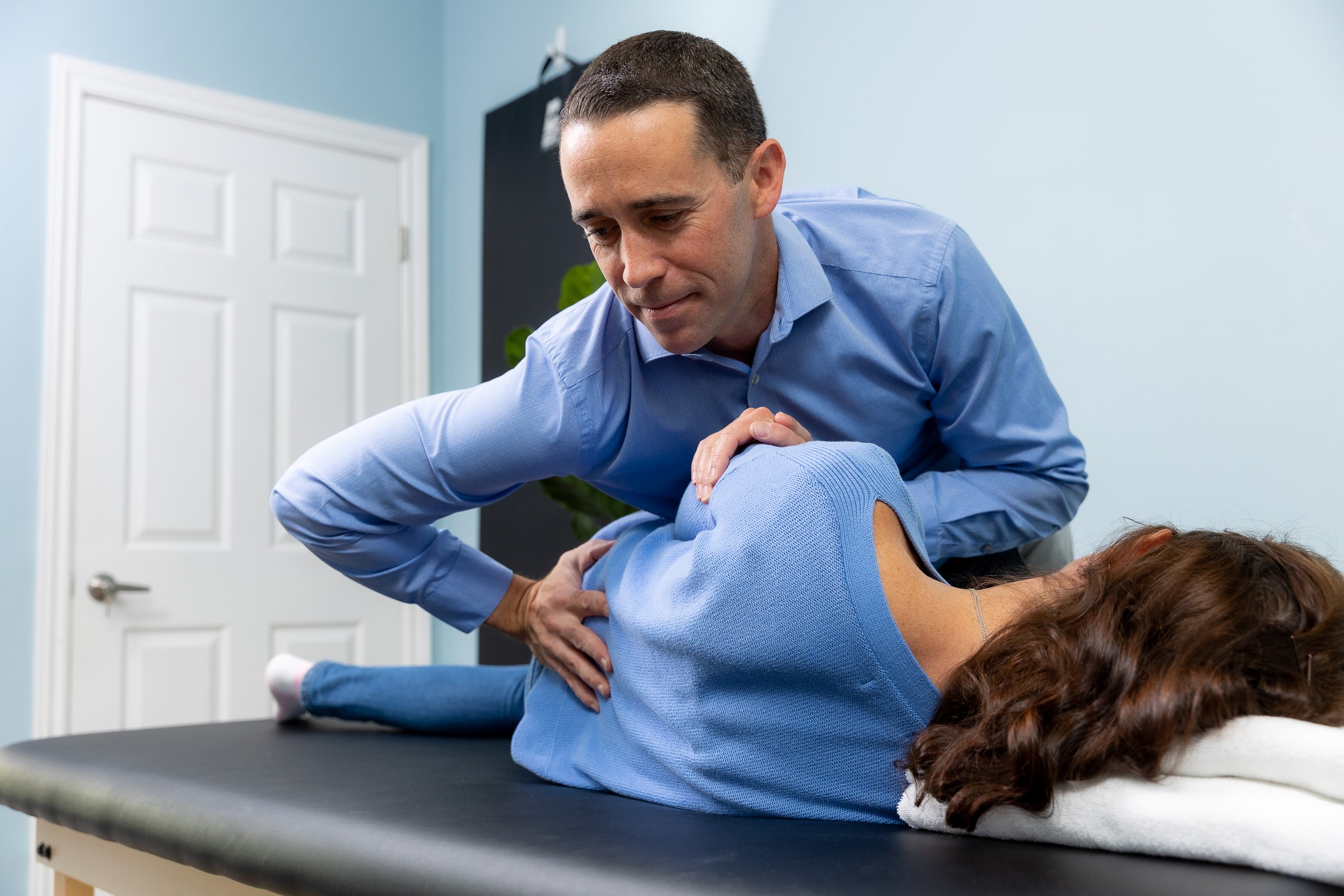
Because we have chiropractors, physiotherapists, massage therapists, and yoga specialists under one roof, we can combine therapies. You might see Dr. Cheyne for an adjustment and Aziz Ahmad, RMT, for soft tissue work in the same week. This often speeds up recovery and reduces the total number of chiropractic visits you need.
Expert Leadership
Dr. Kevin Cheyne is not only the clinic director; he is a leader in spinal health.
Experience: Over 15 years of clinical practice.
Credentials: Doctor of Chiropractic (CMCC), McMaster University Medical Acupuncture graduate.
Specialized Role: As an assessor for the Low Back Pain Rapid Access Clinic Program, he has a level of diagnostic expertise that ensures you get the right diagnosis, fast.
Convenient Location and Hours
We know you are busy.
Location: 3853 Bloor St. W, Toronto, ON M9B 1L2. We are centrally located in Etobicoke with easy access to the TTC and highways.
Hours: We offer evening appointments until 7:00 pm on Tuesdays and Thursdays to accommodate work schedules.
Patient-Centered Philosophy
We do not believe in cookie-cutter treatment plans. We treat the person, not the X-ray. If you only need three visits to get better, we will tell you that. We prize our reputation as a well-reviewed, trustworthy clinic.
What to Expect at Your First Visit
If you have never been to a chiropractor, the idea of "frequency" might seem abstract. Here is what the process actually looks like when you walk through our doors.
The Assessment (45-60 Minutes)
Your first visit is comprehensive. We take a full health history and perform a physical examination. This includes checking your range of motion, neurological function, and orthopedic tests.
Dr. Cheyne will explain exactly what is causing your pain. If chiropractic isn't the right answer for example, if you need a medical specialist we will refer you out.
The Treatment Plan
At the end of the first visit, we provide a Report of Findings. We will tell you:
What is wrong.
Can we help?
How long it will take.
How much it will cost.
This is where we discuss frequency. We lay out the calendar so there are no surprises.
The Treatment
Treatment often begins on the first day. This may include:
Spinal Adjustment: A gentle, controlled force to restore joint motion.
Medical Acupuncture: To stimulate nerve function and reduce pain.
Soft Tissue Therapy: To release tight muscles.
Modalities: Laser or ultrasound to accelerate healing.

Signs You Might Need to Increase Frequency
Sometimes, life happens. Even if you are on a monthly maintenance schedule, certain signs indicate you should book an appointment sooner.
You Hit a Plateau
If you are recovering from an injury and your progress stops, we may need to increase the intensity of care or change the modality. We might switch from passive care to more aggressive strengthening.
New Symptoms Appear
If your back pain disappears but you start getting headaches, your body might be compensating. Do not wait for your next scheduled visit. Address it immediately.
Seasonal Changes
We see a spike in visits during two key times in Etobicoke:
Fall/Winter: Raking leaves and shoveling snow leads to acute lower back strains.
Spring: Gardeners rushing back into heavy lifting often hurt their knees and backs.
Increasing your visit frequency before these heavy activity seasons can act as a buffer against injury.

Comparing Therapies: Chiro vs. Physio vs. Massage
Patients often ask, "Should I see a chiropractor or a physiotherapist?"
Since we offer both, we can give you an unbiased answer.
Chiropractor
Focus: Spine, joints, and nervous system.
Best for: Acute neck/back pain, headaches, stiff joints, sciatica.
Frequency: Often higher initially (2-3x week) then tapers off.
Physiotherapist
Focus: Soft tissue, movement patterns, post-surgical rehab.
Best for: Knee/shoulder injuries, post-op recovery, muscle imbalances.
Frequency: Usually 1-2x week with a heavy emphasis on home exercise.
Marek Lebzuch, our registered physiotherapist, specializes in evidence-based techniques for orthopaedic conditions.
Massage Therapy
Focus: Muscles and circulation.
Best for: Stress relief, muscle tension, lymphatic drainage.
Frequency: Varies wildly. Some patients come weekly for stress management; others come monthly.
Often, the "magic frequency" involves a combination. You might see Dr. Cheyne once a month for spinal alignment and our massage therapist once a month for muscle tension, alternating every two weeks.
The Cost of Care
We believe in transparency. Cost is a major factor in how often patients can visit.
Our Fee Structure
Chiropractic/Acupuncture: Initial assessment is $110. Follow-up visits are $65.
Physiotherapy: Initial assessment is $100. Follow-ups are $85.
Massage Therapy: 60 minutes is $110 (+HST).
Insurance Coverage
We accept Extended Health Care (EHC), Auto Insurance, and WSIB.
Most extended health plans cover chiropractic care. If your plan covers $500 a year, we can calculate exactly how many visits that covers and design a plan that maximizes your benefits without out-of-pocket surprises.
We also offer direct billing for most insurance plans, minimizing your paperwork.


What Our Patients Say
Frequently Asked Questions
-
No. Chiropractors are primary care practitioners in Ontario. You can walk in or book an appointment directly without a referral. However, some private insurance plans may require a doctor’s note for reimbursement, so check your benefits booklet.
-
Yes. Chiropractic care is widely recognized as one of the safest drug-free, non-invasive therapies available for the treatment of neuromusculoskeletal complaints. While some patients feel minor soreness after an adjustment (similar to post-workout soreness), serious adverse events are incredibly rare.
-
No. This is a myth. At West End Rehab & Physical Therapy, our goal is to resolve your issue and teach you how to maintain it. While many patients choose maintenance care because it makes them feel great, it is never mandatory.
-
Your initial assessment takes 45 to 60 minutes. Follow-up treatments are efficient, typically lasting about 30 minutes. We respect your time and rarely keep patients waiting.
-
Yes. In fact, it is often very helpful. We will avoid the surgically modified areas of your spine and focus on the surrounding joints to ensure they are moving correctly, reducing stress on the surgical site. Dr. Cheyne will modify techniques to ensure safety.
-
That sound is not your bones rubbing together. It is a release of gas (nitrogen, oxygen, and carbon dioxide) from the joint capsule. It is exactly the same as popping your knuckles and is a sign of a joint being mobilized.
-
Yes. Children are very active and experience falls and blows from sports. Their care is very gentle. We adapt our techniques for the size and developing spine of the child.
-
Absolutely. Pregnancy puts significant stress on the spine and pelvis. Our treatments can help manage pregnancy-related back pain and ensure the pelvis is balanced, which may help during delivery.
-
We understand that manual adjustments aren't for everyone. We offer a variety of low-force techniques, spinal mobilization, and modalities like laser and acupuncture that do not involve any popping sounds. Just let us know your preference.
-
Yes, in most cases. We are registered with all major online insurance billing systems. We can bill your insurance company directly so you only pay the difference (if any).

Dr. Kevin Cheyne
Kevin is the chiropractor that you can trust for treating your aches and pains. His advanced training in lower back pain relief and certification in contemporary medical acupuncture makes him one of the best in assessing and managing lower back issues and their related symptoms.
Kevin runs his own chiropractic and physical therapy office, where he treats patients with various conditions. Dr. Cheyne has extensive experience and advanced training in a variety of techniques to help patients get through their injuries and to manage their pain. These techniques include joint manipulation, acupuncture, soft tissue therapy, therapeutic modalities, and exercise prescription.
Taking the Next Step
There is no magic number for how often you should see a chiropractor in Etobicoke. It is a decision based on your pain, your goals, and your lifestyle.
Whether you need intensive relief from an acute injury or a monthly tune-up to keep you playing with your grandkids, we are here to help. We combine 15 years of experience with a genuine passion for getting Etobicoke residents pain-free.

Don't let pain dictate your schedule.
Ready to feel better?
Contact us at West End Rehab & Physical Therapy today.